Key points
- Many people feel a sudden zing when they turn their head, and by afternoon the back of the neck feels as heavy as a stone.
- Your shoulder feels stiff when you lift your arm, and pain catches at a certain angle so the arm won't go all the way up.
- Sitting for long periods is hard, and when you stand up your back won't straighten right away, so you lean on the desk and pause for a few seconds.
- Some people feel numbness running from the lower back down through the buttock and thigh.
- From Neck to Pelvis: Where It Hurts Changes the Order of Care
- 1. Neck: Heavy every afternoon, with headaches too
- 2. Shoulder: Your arm stops at a certain angle
- 3. Lower back: It won't straighten when you stand up
- 4. Lower body: One shoe sole wears out faster
- 5. Body asymmetry: I check the pelvis before the shoulders
- When you need a medical evaluation before treatment
- Frequently asked questions
From Neck to Pelvis: Where It Hurts Changes the Order of Care
November 6, 2026
Category Pain clinic
Meta description Neck, shoulder, lower back, lower body and body asymmetry problems show up in different places, but they are connected. This column explains which symptoms I check first for each area, in what order I use acupuncture, pharmacopuncture and Chuna, and which signs mean you need a medical evaluation first.
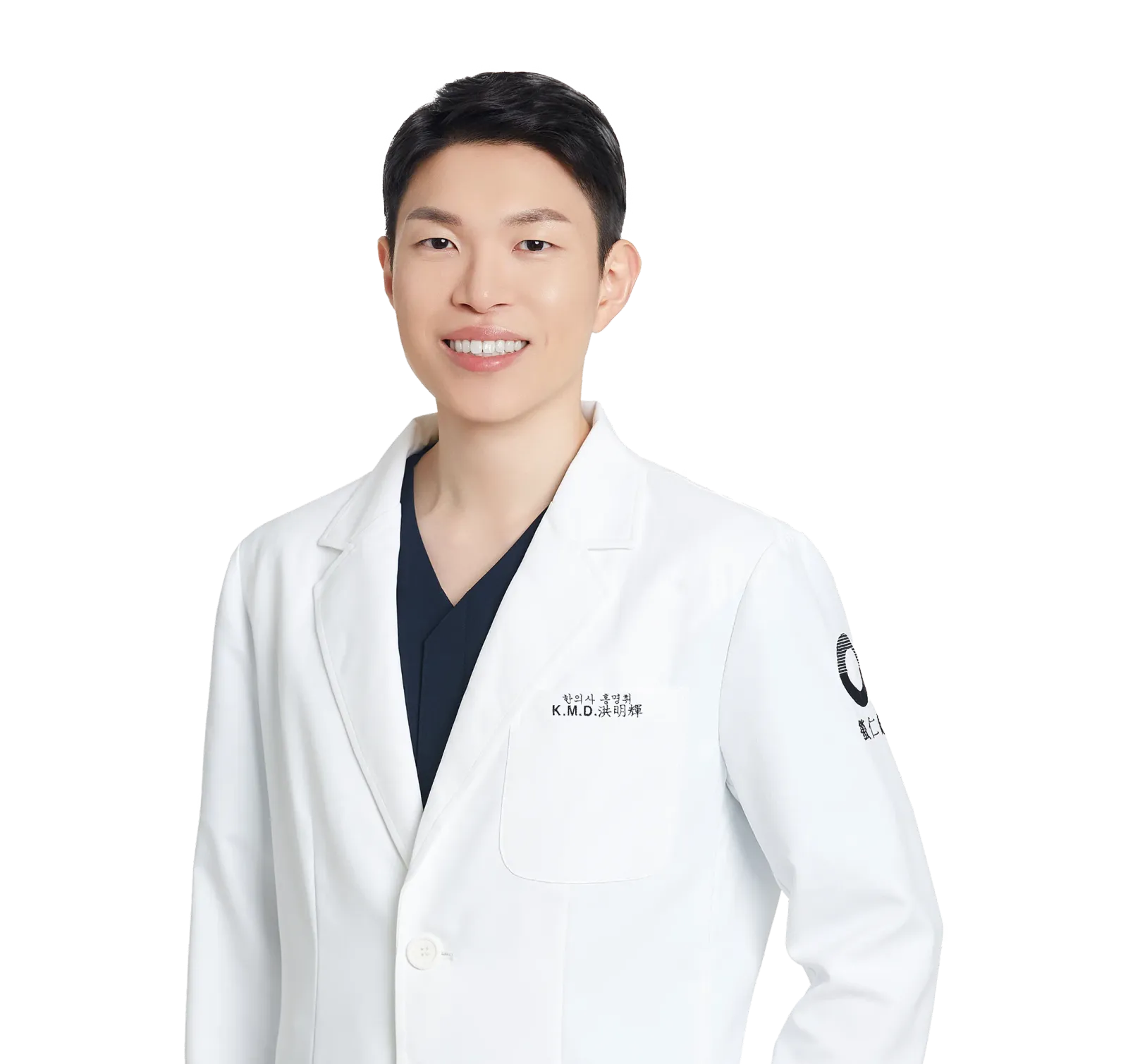
Hello. I'm Dr. Hong Myeonghwi of Hyunginjae Korean Medicine Clinic, Gangnam branch (Acupuncture Hyunginjae Gangnam Diet Korea).
"It hurts here, and it hurts there too." That's what I hear most often from people who come in for pain for the first time. The stiff neck, the tight shoulders, the heavy lower back, the numb legs: it all comes out at once. That's why I don't start by putting needles in the spot that hurts most. First I look at the sequence. Which area broke down first, and how far down has the effect spread?
Below are the symptoms I check and the order of treatment for each area. Find the part that matches you and read on.
1. Neck: Heavy every afternoon, with headaches too
Many people feel a sudden zing when they turn their head, and by afternoon the back of the neck feels as heavy as a stone. That heaviness climbs into headaches at the back of the head or the temples. At night the neck feels uncomfortable, sleep suffers, and focus drops the next day. The cycle repeats.
I don't look at neck pain as a neck problem alone. First I release the tense neck and shoulder muscles with acupuncture and pharmacopuncture. Then I use Chuna Manual Therapy to correct the alignment of the cervical spine, which has shifted forward with straight neck or forward head posture. If you only relax the muscles, the heaviness returns in a few days. If you only fix the alignment, the stiff muscles pull it back again.
Change just one thing in your daily life. Putting your phone down for only 30 minutes before bed often helps both sleep and headaches.
2. Shoulder: Your arm stops at a certain angle
Your shoulder feels stiff when you lift your arm, and pain catches at a certain angle so the arm won't go all the way up. You hesitate when putting on clothes or reaching for something on a shelf. Lying on the painful side may even wake you up.
First I check the exact angle where the arm stops. Around the stiff shoulder joint, I calm inflammation and tension with acupuncture, pharmacopuncture and cupping. Then I use Chuna Manual Therapy to help the shoulder and shoulder blade move together again. The arm can only rise all the way when the shoulder blade rotates along with it.
Move once the painful range gets smaller. Along with treatment, I'll show you a gentle range-of-motion exercise: place your hand on a wall and walk your fingers up one step at a time. Pushing through the pain to force your arm all the way up actually slows recovery.
3. Lower back: It won't straighten when you stand up
Sitting for long periods is hard, and when you stand up your back won't straighten right away, so you lean on the desk and pause for a few seconds. Many people describe a cold ache or a heavy feeling deep inside the lower back.
When I examine the lower back, I look at the pelvis too. I first reduce the pain with acupuncture and pharmacopuncture, then correct the alignment of the pelvis and lumbar spine with Chuna Manual Therapy. But if you stop there, the pain comes back. Once the pain settles, you need to strengthen the core and glute muscles that support your back to prevent it from returning.
Start slowly. If exercise still feels like too much, I recommend low-impact cardio such as walking on flat ground, swimming or an indoor bike rather than running. These put less stress on the back while waking up the muscles around the pelvis.
4. Lower body: One shoe sole wears out faster
Some people feel numbness running from the lower back down through the buttock and thigh. If your legs also look different in length, or the sole of one shoe wears out much faster than the other, it's worth suspecting a tilted pelvis. It's a sign that your weight lands on the same side every day.
I treat numbness and misalignment separately. A tilted pelvis is corrected with Chuna Manual Therapy. If there is numbness, I find where the nerve is being pressed and add acupuncture and pharmacopuncture. After each treatment, I check again whether leg length and pelvic height have evened out.
Turn your shoes over. If you bring them to your visit, the wear pattern on the soles is a helpful clue to how you normally walk.
5. Body asymmetry: I check the pelvis before the shoulders
Some people notice that one shoulder is always higher in photos, one side of their pants keeps twisting around, or sitting feels uncomfortable unless they cross their legs. They come in thinking the shoulder is the problem, but in many cases it actually started lower down.
I look at the pelvis before the shoulders. When the pelvis tilts, the spine above it curves to keep balance, and as a result the shoulder height changes too. So I first correct the pelvis with Chuna Manual Therapy, then move on to the spine and then the shoulders. If you reverse the order, the pelvis pulls the shoulders back down even after they've been aligned.
Change your habits as well. Daily postures like crossing your legs, carrying your bag on one side only, or standing with your weight on one leg undo the effects of treatment several times a day. During treatment, I'll also help you decide which habits to tackle first.
When you need a medical evaluation before treatment
If your leg suddenly swells badly, or one calf becomes hot and hard, or numbness comes with weakness so you can't lift your toes or your walking becomes unsteady, it may be a different condition. If lower back pain comes with loss of bladder or bowel control, or reduced sensation in the groin area, get a medical evaluation right away. In these cases, I do not start with acupuncture or Chuna.
Frequently asked questions
Q Several areas hurt at the same time. Do you treat them all at once?
Rather than handling everything at once, we set an order. Usually we start with the area that hurts most and the area where the problem began (often the pelvis or neck), then move on to the connected areas.
Q How many Chuna sessions will I need?
It depends on how long the misalignment has been there and on your daily habits. At the first visit, I check your alignment and movement and give you a rough plan. At every visit after that, I recheck the changes and adjust the plan.
Q When can I start exercising?
Once the pain settles and everyday movements feel comfortable. Begin with low-impact exercise such as walking, swimming or an indoor bike, plus gentle range-of-motion exercises. Then increase strength training step by step.
If your neck, shoulders, lower back and legs all feel uncomfortable, think first about where it started, not just where it hurts most. When you visit Hyunginjae Korean Medicine Clinic, Gangnam branch, please tell us when each area started bothering you, along with your usual posture and habits. This helps us decide the order of treatment. This does not replace professional medical care.
This column is general health information and does not replace an individual diagnosis or treatment plan. Please have the cause of your symptoms and the right treatment confirmed through an evaluation by a medical professional.
This has been Dr. Hong Myeonghwi of Hyunginjae Korean Medicine Clinic, Gangnam branch (Acupuncture Hyunginjae Gangnam Diet Korea).
Consultations are available in English, Japanese and Chinese.
Parking: A parking elevator is available in the building. If you drive an SUV or a large sedan, please contact us before your visit.
For appointments, please contact us by phone or through our website.
2F & 3F, 20 Yeoksam-ro 1-gil, Gangnam-gu, Seoul
tel. +82-2-540-8875
This article is general health information and does not replace a personal diagnosis. If symptoms persist or worsen, please see a doctor.
About our doctor