Key points
- The first layer is bone. One side of the lower jaw may be longer, or one cheekbone may stick out more. This is mostly set during the growth years.
- First, clear away optical illusions.
- Many apps show a symmetry score as a number when you upload a photo of your face.
- If you suspect the bone layer, start with a dentist or an oral and maxillofacial surgeon. A panoramic or frontal head X-ray can check the difference in length between the two sides.
- Gangnam Facial Asymmetry: First Find Out Whether It Is Bone, Muscle, or Jaw Joint
- 1. Facial Asymmetry Is Not One Problem but Three Layers
- 2. How to Tell the Three Layers Apart at Home
- 3. Symmetry App Scores Don't Tell You the Cause
- 4. When to See a Dentist First, and What a Korean Medicine Clinic Can Do
- Frequently Asked Questions
Gangnam Facial Asymmetry: First Find Out Whether It Is Bone, Muscle, or Jaw Joint
November 2, 2026
Facial asymmetry can come from a difference in the jawbone, a difference in chewing muscle thickness, or a jaw joint problem. Each calls for a different approach. This column explains how to tell the three layers apart at home, the limits of symmetry app scores, when to see a dentist first, and what a Korean medicine clinic can help with.
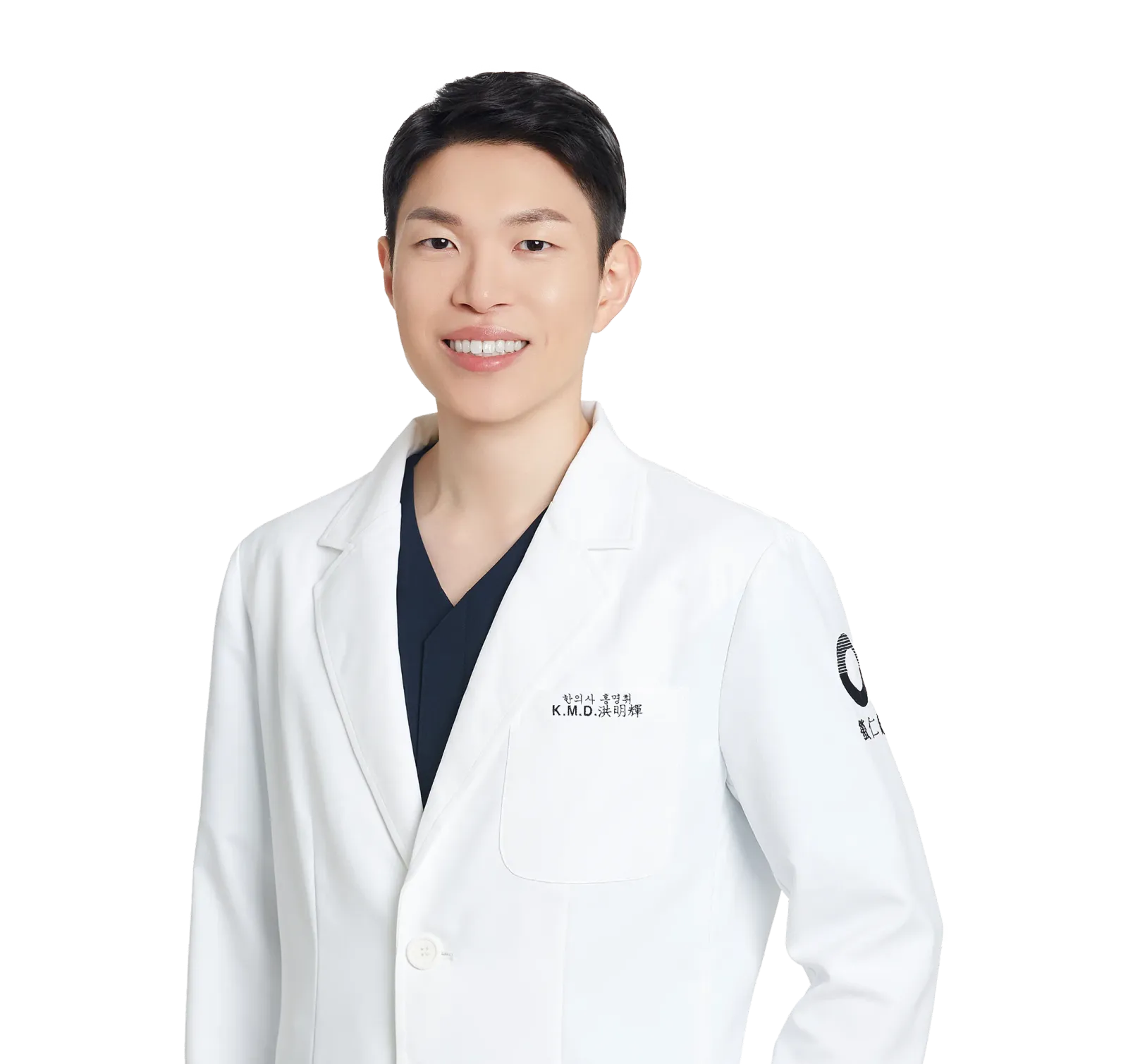
Hello. I'm Dr. Hong Myeonghwi, head doctor at Hyunginjae Korean Medicine Clinic, Gangnam (Acupuncture Hyunginjae Gangnam Diet Korea).
In facial asymmetry consultations in Gangnam, the question I hear most is, "How bad is it?" But I don't answer that right away. Two faces can look equally crooked for different reasons. In one, the jawbone itself differs. In another, the chewing muscle on one side has grown thicker. In a third, a jaw joint problem has pushed the lower jaw off-center. Each needs a different place to go, and each allows different things to be done.
Earlier columns covered how to take photos, how to keep a daily log, and emergency signs such as sudden drooping. This column covers only the next step: how to work out which layer the problem is in. Sort out the layer first.
1. Facial Asymmetry Is Not One Problem but Three Layers
The first layer is bone. One side of the lower jaw may be longer, or one cheekbone may stick out more. This is mostly set during the growth years. If your chin points to one side, and the center line of your lower teeth doesn't match the center of your face even with your mouth closed, suspect this layer first. This difference is confirmed with imaging. Acupuncture or Chuna Manual Therapy cannot move bone.
The second layer is muscle. If you chew on only one side or clench your teeth for a long time, the masseter (chewing muscle) on that side gets thicker. The jawline and the area below the cheekbone then look wider. This is a common reason a face looks uneven even when the bones are symmetrical. This layer can keep changing in adulthood, getting wider or narrower depending on your habits.
The third layer is the jaw joint. If the disc position or movement in one joint changes, the lower jaw is pulled toward that side when you open your mouth. Even when you close it, the lower jaw settles in a slightly shifted position. Here the asymmetry is the result and the jaw joint is the cause, so treating only the face won't bring it back. I don't mix these three layers together. Many people have two or more at once. But the more they overlap, the more important it is to decide which layer is the main cause. Only then can a care plan take shape.
2. How to Tell the Three Layers Apart at Home
First, clear away optical illusions. A face flipped left to right in a photo app looks different from what you see in the mirror, so it can look more crooked than it really is. Turn off the flip and look again. If a difference remains, line up photos from three years ago, one year ago, and now, and see when the gap appeared. If nothing has changed since your growth years, bone is more likely. If it changed in the last one to two years, muscle or the joint is more likely.
Check the muscle with your hands. Clench your back teeth and feel both sides of your face, just below and in front of your ears. If only one side bulges out hard, the masseter on that side is thicker. Then relax and see whether the two sides become similar. If it's a bone difference, the outline stays the same whether you clench or relax.
Check the joint by movement. In front of a mirror, slowly open your mouth as wide as it goes. Watch whether your chin comes straight down or traces an S, bending to one side and then back. If you can't fit three fingers stacked vertically between your teeth, or you feel a catch or hear a sound in front of your ear, suspect the jaw joint layer first. Write down which of the three checks showed the most signs. That note helps decide which exam to do first at your visit.
3. Symmetry App Scores Don't Tell You the Cause
Many apps show a symmetry score as a number when you upload a photo of your face. In consultations I often hear, "I got 92%. Do I need treatment?" But that number changes by several points in a single day for the same person, depending on camera distance, lighting, head tilt, and facial expression.
The bigger problem is that the score can't tell the layers apart. A person whose bones differ by 3 mm and a person with one thicker muscle can get the same score. The first person needs imaging and a dental consultation first. The second needs to change their chewing habits and work on muscle tension first. Same number, different path.
I use the score only as a point of comparison. Photos taken under the same conditions a few months apart can help show a trend. But I don't use that number to decide what is normal or abnormal, or whether a procedure is needed. Set the score aside.
4. When to See a Dentist First, and What a Korean Medicine Clinic Can Do
If you suspect the bone layer, start with a dentist or an oral and maxillofacial surgeon. A panoramic or frontal head X-ray can check the difference in length between the two sides. This is especially important for growing teens whose lower jaw seems to keep growing toward one side. Don't put off an orthodontic visit. Once growth ends, there are fewer options. For the jaw joint layer, if there is pain, locking, or limited mouth opening, an oral medicine evaluation comes first. A painless clicking sound on its own is not usually something that needs treatment.
A Korean medicine clinic mainly works with the muscle layer, along with movement around the jaw joint and neck and shoulder alignment. Tension in a masseter that has thickened on one side, imbalance in the neck muscles that pull on the jaw, and morning jaw stiffness that comes with teeth grinding can be managed with acupuncture, Chuna Manual Therapy, and habit correction. But that doesn't mean your face will become symmetrical. When the muscles find balance, your overall look can change. The bone does not move.
Follow the right order. I don't assume a bone problem is a muscle problem without imaging. And I don't recommend facial procedures first to someone with jaw joint pain. If you already have test results or a dentist's opinion, please bring them. They help show from the start what Korean medicine care can and cannot address. Sudden drooping on one side of the face, or being unable to close one eye, does not belong to any of the three layers in this column. These are emergency signs. Get checked at a medical facility right away.
Frequently Asked Questions
Q Can I tell from photos alone whether it's a bone or muscle problem?
Photos only allow a guess. If your outline changes between clenching your back teeth and relaxing, muscle is more likely. If it stays the same, bone is more likely. A diagnosis is confirmed with imaging and an exam.
Q If I just practice chewing on the other side, will muscle asymmetry go back to normal?
If the muscle layer is the cause, correcting your chewing habits is the basic step. But if the reason you chew on one side is still there, such as a cavity, a missing tooth, or jaw joint pain, it's hard to change the habit alone. Have a dentist check that cause first.
Q Can acupuncture or Chuna Manual Therapy correct jawbone asymmetry?
No. Acupuncture and Chuna Manual Therapy work on muscle tension, movement around the jaw joint, and neck and shoulder alignment. For a left-right difference in bone, see a dentist or an oral and maxillofacial surgeon first. It is safer to use Korean medicine care alongside that, with a clear sense of what it can do.
If you're worried about facial asymmetry in Gangnam, start by working out which layer is involved, bone, muscle, or jaw joint, rather than how crooked your face looks. If you suspect a problem with the bone or jaw joint structure, imaging at a dentist or an oral and maxillofacial surgeon comes first. When you visit Hyunginjae Korean Medicine Clinic, Gangnam, bringing those results and your history of orthodontics or procedures helps us define what Korean medicine care can do for muscle tension and posture. This does not replace specialist care.
This article is general health information and does not replace an individual diagnosis or treatment plan. Please have a medical professional evaluate the cause of your symptoms and the right treatment.
This has been Dr. Hong Myeonghwi, head doctor at Hyunginjae Korean Medicine Clinic, Gangnam (Acupuncture Hyunginjae Gangnam Diet Korea).
Consultations are available in English, Japanese, and Chinese.
Parking: A parking elevator is available in the building. If you drive an SUV or a large sedan, please call us before your visit.
For appointments, please call us or contact us through our website.
2F and 3F, 20 Yeoksam-ro 1-gil, Gangnam-gu, Seoul
tel. +82-2-540-8875
This article is general health information and does not replace a personal diagnosis. If symptoms persist or worsen, please see a doctor.
About our doctor