
Hello, I’m Dr. Hong Myeong-hwi, Chief Physician at Hyunginjae Korean Medicine Clinic Gangnam (Acupuncture Hyunginjae Gangnam Diet Korea).
Suppose you took your last InBody test before breakfast, but this one after an evening workout. A lower muscle mass reading does not automatically mean you lost that amount of muscle. The testing conditions were different.
I look at fat and muscle together rather than judging body shape by weight alone. Still, a detailed report cannot establish a change in your body from a single measurement.
- 1. Hydration affects muscle readings too
- 2. Keep four conditions consistent next time
- 3. Compare everyday habits as well as reports
- 4. Tell the testing team about your health first
- Frequently Asked Questions (FAQ)
1. Hydration affects muscle readings too
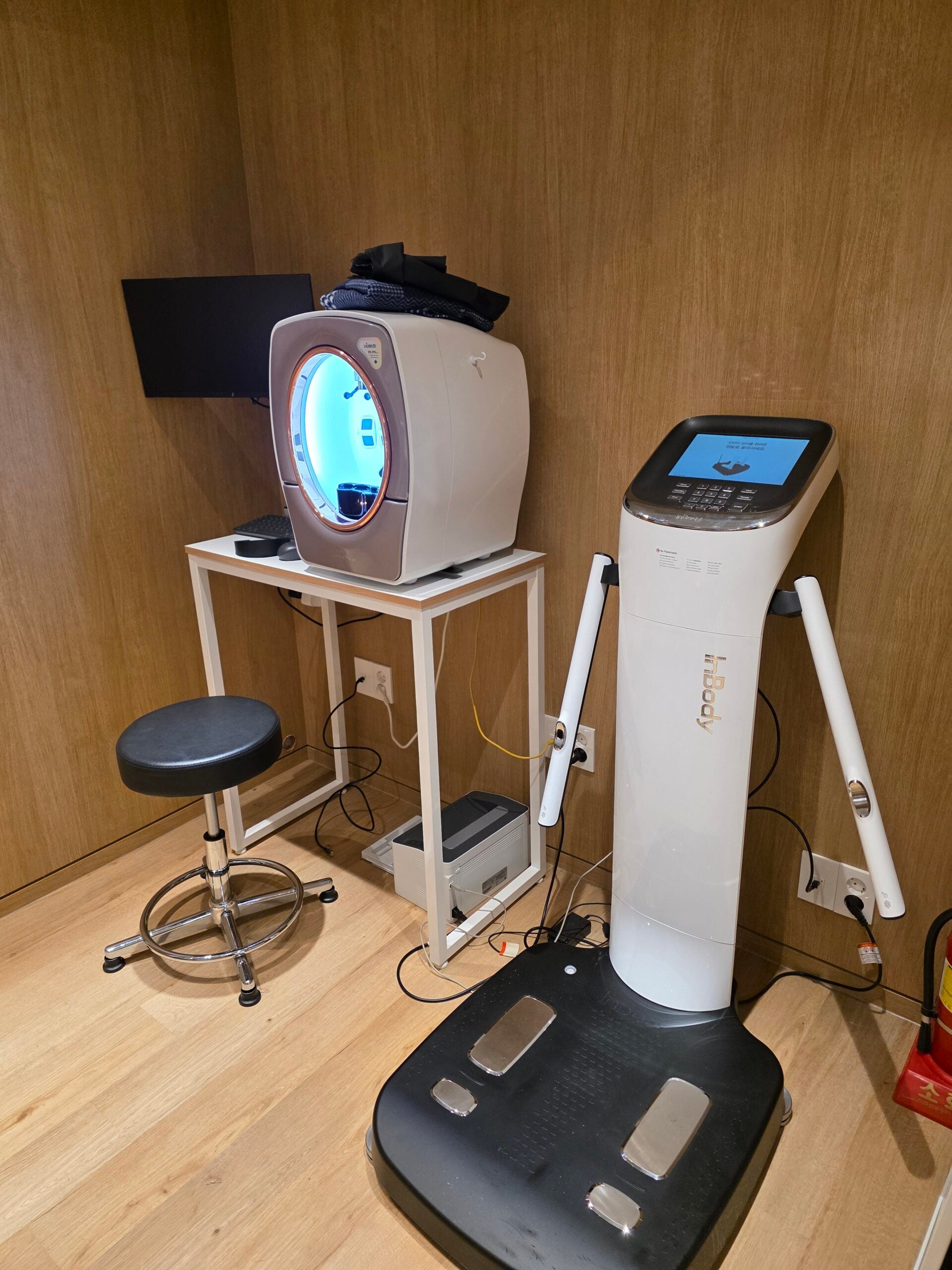
Water matters. InBody measures the body’s electrical resistance using a small current, then estimates body water and composition. It does not weigh your muscles directly.
Heavy sweating and changes in meal or drinking times can affect the result. Body fat percentage expresses fat as a proportion of body weight, so read it alongside weight, fat mass, and skeletal muscle mass.
If the result surprises you, don’t immediately cut food further. Compare the earlier report and the circumstances of each test first. A single report cannot readily separate actual body changes from differences in testing conditions.
2. Keep four conditions consistent next time
Consistency helps. Use the same device at a similar time of day where possible, and ask the testing facility for that model’s preparation instructions when booking.
- Meals: Note when you last ate. Follow the device and facility guidance on how long to wait after food.
- Exercise: Avoid testing immediately after a workout, and mention strenuous exercise the previous day.
- Fluids: Keep your usual hydration habits. Don’t stop drinking to lower the number or drink a large amount just before the test.
- Clothing and posture: Remove heavy outerwear and belongings, then follow instructions for electrode contact and positioning.
A note such as ‘test at 10 a.m. / last meal at 7 a.m. / strength training the previous evening’ makes the results easier to discuss. This is a logging example, not a fasting schedule for everyone.
3. Compare everyday habits as well as reports
Look for a pattern. I value reviewing everyday habits alongside objective information such as InBody measurements. Missed meals and changes in activity or sleep matter, not just how much less you ate.
If weight has fallen but you feel drained and ordinary activities are harder, don’t dismiss that because the number is lower. Equally, one higher body fat percentage reading does not establish that weight loss has failed.
Keep dated copies of earlier results and maintain comparable conditions next time. Agree on a retesting interval that suits your goal and health. Repeated testing alone cannot determine the right food or exercise plan.
4. Tell the testing team about your health first
Health comes first. If you have a pacemaker or another implanted electronic medical device, tell the team before testing. A clinician and the device instructions must establish whether you can use it. Also mention pregnancy or the possibility of pregnancy beforehand.
If you have substantial swelling or a heart or kidney condition that requires fluid management, do not simply follow general hydration advice. Don’t stop prescribed medicine or severely restrict food or fluids for a test.
In Korean medicine weight consultations, body composition results are one part of a broader assessment. A report alone cannot diagnose disease or determine an herbal prescription or procedure.
Frequently Asked Questions (FAQ)
Is a test right after exercise more accurate?
No. Exercise changes body water distribution and temperature, which can affect the reading. Follow the facility’s preparation guidance rather than testing straight after a workout.
Should I avoid water before the test?
Don’t deliberately dehydrate yourself. Keep your usual fluid intake and follow the facility’s guidance. If your treatment includes fluid restriction, your treating clinician’s instructions take priority.
Can I bring results from another facility?
Yes. Mention any differences in the device or testing time. Those reports can inform a discussion about conditions and habits, even when the numbers are not directly comparable.
Bring your earlier report and the times of your last meal and workout to the next test. Before changing your diet in response to a reading, check whether the two tests were comparable.
This is general health information, not an individual diagnosis or treatment plan. A clinician should assess the cause of symptoms and appropriate care.
This was Dr. Hong Myeong-hwi, Chief Physician at Hyunginjae Korean Medicine Clinic Gangnam (Acupuncture Hyunginjae Gangnam Diet Korea).
Consultation is available in English, Japanese, and Chinese.
Parking: a parking elevator is available inside the building. For SUVs and large sedans, please contact us before your visit.
For appointments, please contact us by phone or through our website.
2F–3F, 20 Yeoksam-ro 1-gil, Gangnam-gu, Seoul
tel. +82-2-540-8875


